One of our research foci foregrounds the role of tools as active participants in making and digital fabrication contexts. Drawing on feminist and sociomaterial perspectives, we examine how tools co-produce practices and relations within making environments, thereby shaping access to knowledge and communities as well as possibilities for materially grounded action.
One strand of this work conceptualizes tools as accomplices of makers in the context of Computational Empowerment. Inspired by posthuman perspectives in Human-Computer Interaction (HCI), we study how digital fabrication tools participate in learning, sensemaking, and collaboration, not as neutral extensions of human intent, but as active partners in coproduction. Through their material characteristics, temporalities, and constraints, tools shape what can be learned, how practices unfold, and whose forms of participation are enabled or limited. Attending to tools as accomplices allows us to surface often-overlooked dynamics of power, care, and responsibility embedded in making practices.
A second strand develops a tool- and material-centered approach to Codes of Conduct in makerspaces. Here, we ask how values such as respect and inclusion are enacted not only through interpersonal behavior, but also through ongoing engagements with tools, infrastructures, and material residues. From this perspective, Codes of Conduct become less about abstract rules and more about situated, sociomaterial practices of care that are negotiated across people and things in makerspaces.
To operationalize this tool- and material-centered perspective, we developed two complementary activities that translate these ideas into practice in makerspaces. Together, they offer both lightweight entry points and more structured opportunities for collective reflection on how tools and materials shape social relations and thereby co-produce norms of care, responsibility, and inclusion.
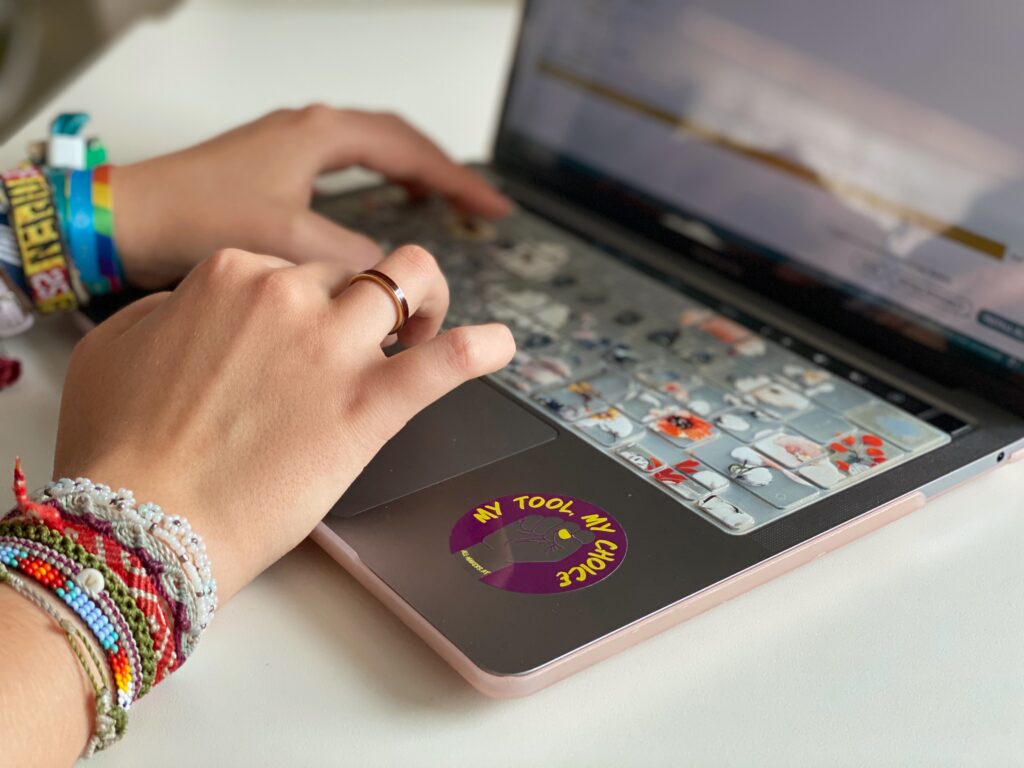
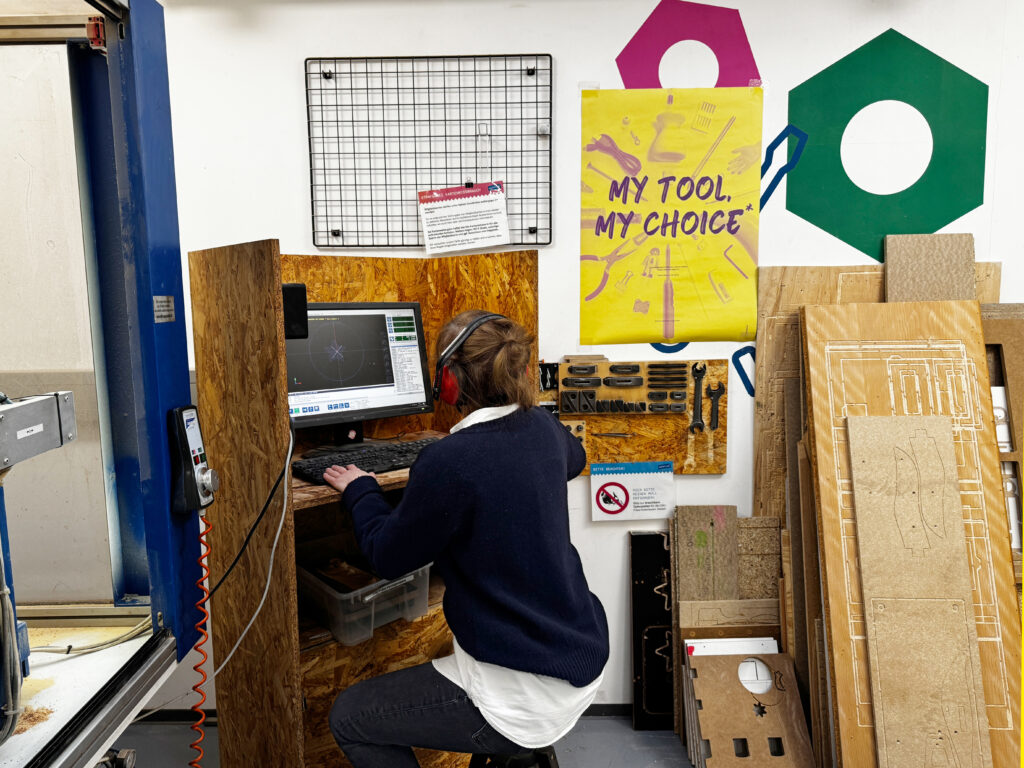
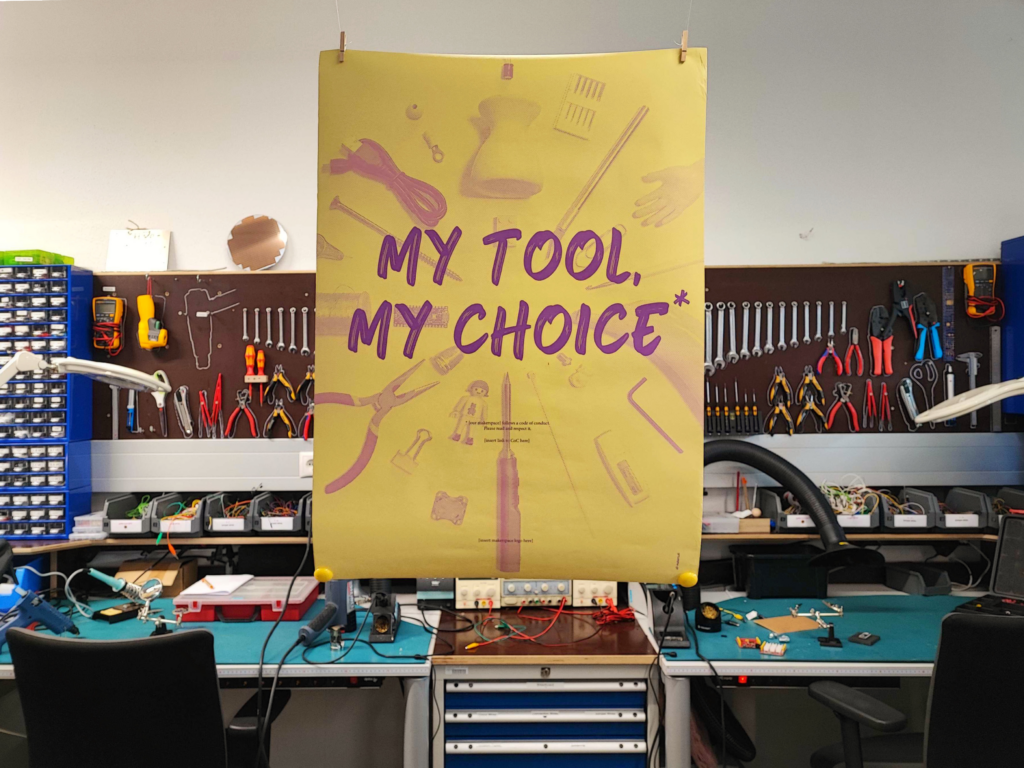
The first activity is a low-threshold communication strategy built around the slogan “My Tool, My Choice.” Designed to draw attention to the often-overlooked role of objects in shaping social interactions, this strategy enables makerspace communities to engage with questions of consent, accountability, and care without relying on lengthy texts. Implemented through stickers, buttons, and a poster, the slogan functions as a situated nudge and a conversation starter, as well as a lightweight entry point to existing Codes of Conduct where they exist. By echoing the feminist maxim “My Body, My Choice,” it reframes self-determination in making as extending beyond one’s own body to include the tools and materials one uses, foregrounding the ethical and relational dimensions of sociomaterial practice.
The second activity is a more structured, card-based conversational tool designed to support the collective development and refinement of Codes of Conduct. Building on shared experiences of makerspace tensions and on prior work in this area, we created the Tension–Aspiration Tool, a semi-structured, card-based format that helps participants reflect on the triangular relationship between two human actors and a particular nonhuman actor (such as a tool or material). Through the exchange of anecdotes, participants surface potential tensions within these sociomaterial constellations and then, in a subsequent step, translate them into positive aspirations for community values and behavior.
Two academic publications addressing the topics presented above are currently under review.